Witness the world's greatest wildlife spectacle as millions of wildebeest, zebras and gazelles journey across the Serengeti plains.
The Great Migration is the largest overland wildlife migration on Earth. Every year, over 1.5 million wildebeest, joined by hundreds of thousands of zebras and Thomson's gazelles, make a continuous circular journey across the Serengeti ecosystem in Tanzania and the Maasai Mara in Kenya.
Driven by ancient instincts and the search for fresh grazing, this eternal cycle covers nearly 1,800 miles and is one of nature's most dramatic and emotionally powerful events. From the mass calving season on the southern plains to the harrowing river crossings of the Mara River, the migration offers constantly changing wildlife encounters throughout the year.
No two safaris during the migration are ever the same. The herds are always on the move, and the landscape shifts with them, creating a dynamic and ever-evolving safari experience.
The migration is a year-round event, but each phase offers a unique experience.
The migration congregates on the short-grass plains of the southern Serengeti and Ndutu region. This is calving season, where over 8,000 wildebeest calves are born each day. The open plains attract predators, making this one of the best times for dramatic predator-prey interactions.
Best for: Predator encounters, newborn animals, Ndutu areaAs the rains come, the herds begin their journey north and west through the Serengeti. They pass through the central Seronera region and into the western corridor, following the Grumeti River. This is a quieter period with fewer tourists and dramatic stormy skies.
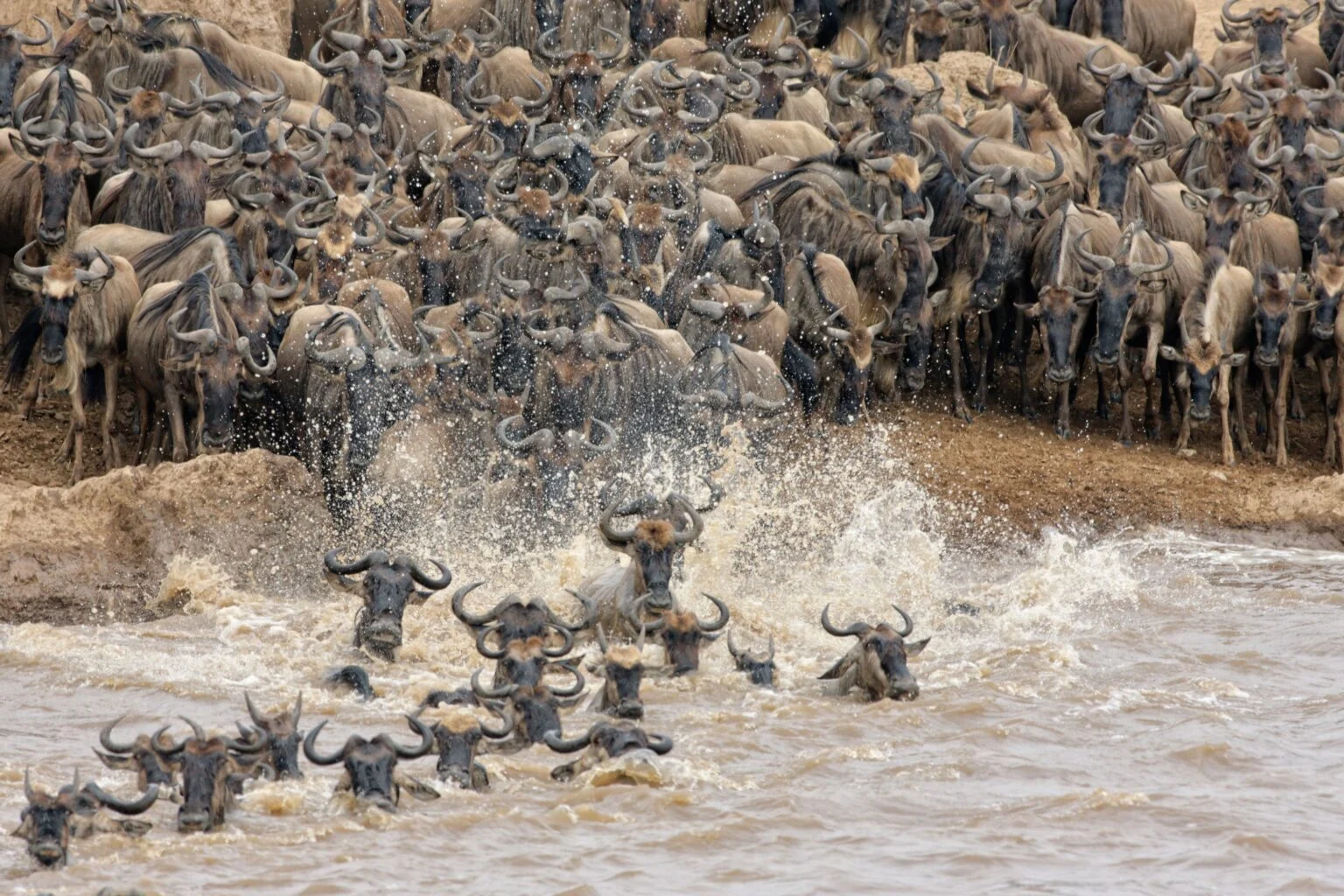
Best for: Fewer crowds, lush landscapes, Grumeti River areaThe most dramatic phase of the migration. The herds reach the northern Serengeti and attempt to cross the Mara River, where crocodiles and strong currents make every crossing a life-or-death struggle. July to September is peak crossing season and the most sought-after safari experience.
Best for: River crossings, Mara River, peak wildlife densityThe short rains trigger the herds to begin their return journey south. They pass through the eastern Serengeti and eventually settle back on the southern plains, completing the great circular journey. This is an excellent time for wide-angle shots of the vast herds spread across the landscape.
Best for: Return journey, fewer tourists, eastern Serengeti
The heart of the Great Migration. The Serengeti's 14,750 square kilometers of savanna, kopjes and river valleys host the herds for most of the year. The park is divided into three key areas: the southern plains, central Seronera and northern Mara region.
Migration months: Year-round, with different areas active at different times.
Adjacent to the Serengeti, the Ngorongoro Conservation Area forms part of the broader migration ecosystem. The southern Serengeti plains extend into Ngorongoro, where calving season takes place on the Ndutu side.
Migration months: December to March (calving season on Ndutu plains).
The migration is always happening, but the experience varies by month and location.
The most popular time for a migration safari. The dramatic Mara River crossings between July and September draw photographers and wildlife enthusiasts from around the world. Expect larger crowds but unmatched spectacle.
July - OctoberWitness the miracle of thousands of wildebeest calves taking their first steps. The predator activity is intense as lions, cheetahs and hyenas take advantage of vulnerable newborns on the open plains.
January - MarchThe quieter months offer lush landscapes, dramatic skies and excellent birdwatching. Fewer tourists mean more intimate experiences and lower prices without missing the migration action.
April - May, NovemberFor the full migration experience, June to October offers the widest variety of wildlife activity. However, the best time truly depends on what aspect of the migration interests you most.
June - October (overall best)How long should you spend on a Great Migration safari?
Eight days following the Great Migration through the Serengeti's most spectacular regions. Stay in exclusive luxury camps positioned in prime migration zones, enjoy private game drives with an expert guide and witness nature's greatest spectacle from the comfort of premium lodges.
Your journey includes the southern plains during calving season, the central Seronera region for big cat sightings and the northern Mara area for potential river crossings. Every day brings a new chapter of the migration story.
Ready to witness the Great Migration? Tell us your preferred dates and we will position you at the right place at the right time for the ultimate safari experience.
Plan My Migration Safari